Electrode Potentials and Electrochemical Cells
AQA A-Level Chemistry
3.3.1
The Electrode Potentials and Electrochemical Cells unit explores how redox reactions can be used to transfer energy between chemical and electrical systems, building on the principles of oxidation, reduction and electron transfer introduced earlier in the course. You will explore how electrode potentials can be used to compare the tendency of different species to gain or lose electrons, how electrochemical cells generate electrical energy, and how cell potentials can be used to predict whether redox reactions are feasible. These ideas provide a foundation for understanding how electrochemical processes can be harnessed in practical applications.
Choose your topic

1. Electrochemical Cells
Learn how electrochemical cells convert chemical energy into electrical energy through redox reactions.
View Topic

2. Standard Electrode Potentials
Discover how to measure standard electrode potentials.
View Topic

3. Calculating Cell EMF
Learn how to calculate the EMF of an electrochemical cell using standard electrode potentials.
View Topic
4. Salt Bridges
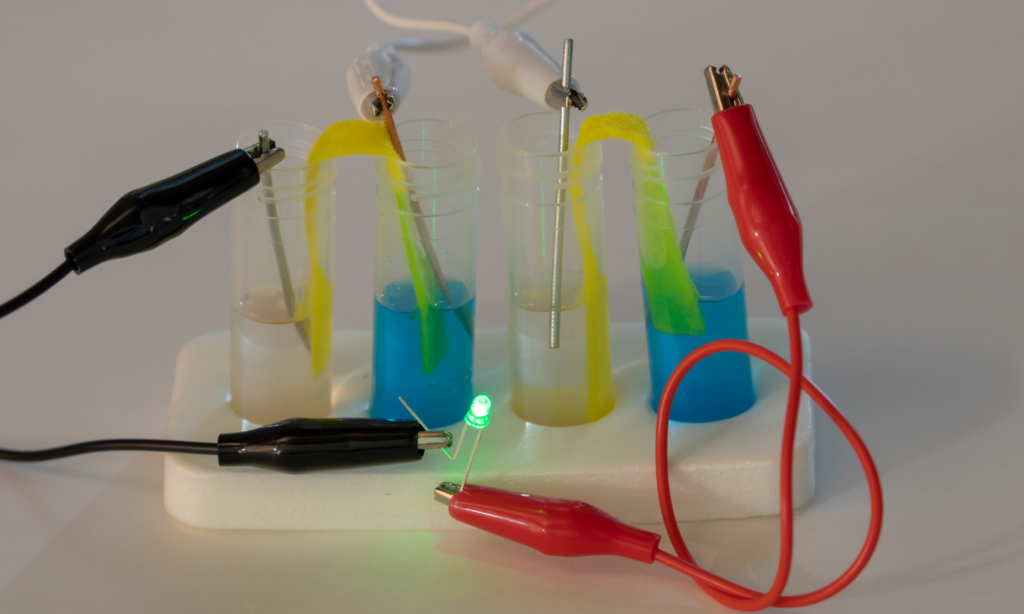
Understand how salt bridges maintain electrical neutrality and allow current to flow through an electrochemical cell.
View Topic

5. Representing Electrochemical Cells
Learn how to represent electrochemical cells using conventional representations.
View Topic